
Breaking Business News | Breaking business news AM | Breaking Business News PM | Business News Select | Fast-Facts | Link from bio
South African rigid packaging has outgrown the flexibles sector in volume and value over the last decadeIntro
AI-SWOT: AI as Strategic Amplifier
A Global Advisors Strategy Tool
"AI doesn't change what matters strategically. It changes what is possible strategically.""
Every decade or so, a general-purpose technology arrives that forces strategists to re-examine the foundations of competitive advantage. Electrification did it. Computing did it. The internet did it. Artificial intelligence is doing it now — and the consequences are more profound than most strategic planning frameworks have yet absorbed.
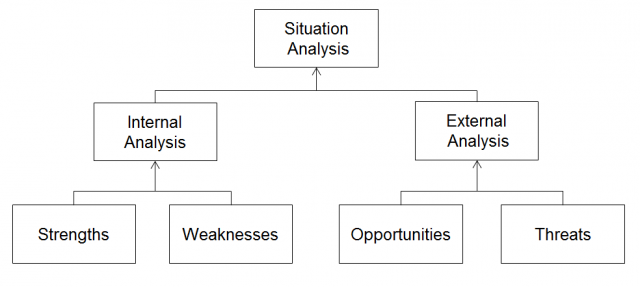
The classical SWOT analysis — Strengths, Weaknesses, Opportunities, Threats — remains one of the most enduring tools in the strategist's kit. Its simplicity is its power: it provides a structured lens for examining both the internal state of an organisation and the external conditions it operates within. But in an era of generative AI, large language models, agentic systems, and machine intelligence embedded across every business function, the SWOT framework needs a new layer of thinking.
The central proposition of this tool is straightforward: AI acts as an amplifier across all four SWOT quadrants.
It can accelerate and deepen existing Strengths. It can partially or substantially compensate for Weaknesses. It can widen and accelerate Opportunities. And it can raise — or in some cases lower — the potency of Threats. Crucially, AI can also be deployed deliberately to mitigate Weaknesses and Threats — turning what was once a passive inventory of disadvantages into an active mitigation agenda.
This is not a tool about whether to adopt AI. That debate has largely been settled. This is a tool about how to think rigorously about AI's strategic implications for your specific position — and how to build an action agenda from that thinking.
Part One
Reframing SWOT for the AI Era
The Classic Framework and Its Limits
Traditional SWOT analysis is a snapshot — a structured brainstorm conducted at a point in time, typically in a workshop setting, drawing on the knowledge and assumptions of those in the room. It produces a list. What it rarely produces, without additional methodology, is a dynamic view of how those factors interact, how they will evolve, or how emerging technology reshapes the strategic calculus.
The TOWS matrix — an extension of SWOT that crosses quadrants to generate strategic options (SO, WO, ST, WT strategies) — represents one important evolution. But even TOWS remains largely static and dependent on the quality of human input.
AI changes three things fundamentally about SWOT:
- The quality of inputs. AI can synthesise far more data — market signals, competitor intelligence, customer sentiment, regulatory trends, hiring patterns — than any workshop group. What previously took weeks of research can now take hours.
- The speed of iteration. SWOT can become a living document rather than an annual artefact, updated continuously as conditions change.
- The strategic action set. AI does not merely describe the SWOT landscape — it creates new strategic options that did not previously exist.
Introducing the AI-SWOT Framework
The AI-SWOT framework presented here works through four analytical lenses and one cross-cutting capability
Lens
Strategic Question
1
AI Amplifies Strengths
Which of our existing strengths can AI make disproportionately more powerful?
2
AI Amplifies Opportunities
Which opportunities does AI expand, accelerate, or make accessible to us for the first time?
3
AI Mitigates Weaknesses
Which of our structural weaknesses can AI partially or substantially compensate for?
4
AI Mitigates Threats
Which of our external threats can AI detect earlier, reduce in impact, or neutralise?
5
AI as New Threat
In what ways does AI itself, or competitors' use of AI, constitute a new threat requiring strategic response?
Each lens is explored in detail below, with case studies, worked examples, and a set of diagnostic questions and tasks for practitioners.
Part Two
AI Amplifies Strengths
The Principle
A Strength in your SWOT represents something your organisation does better than competitors, or a resource or capability that is difficult to replicate. AI's most powerful strategic effect here is the concept of asymmetric amplification: AI applied to a genuine, proprietary strength can make that advantage so large, so fast, and so embedded in your operations that it becomes substantially harder for competitors to close the gap.
The critical insight is that AI applied to a mediocre capability merely produces a faster mediocrity. Applied to a genuine strength — one grounded in proprietary data, specialist expertise, or unique customer relationships — it creates a moat.
Mechanism: How AI Amplifies Strengths
- Scale without proportional cost: A strength in personalisation, advisory capability, or content creation can be deployed at far greater scale via AI, without linear increases in headcount or cost.
- Speed advantage: Where market speed is a strength, AI compresses decision cycles further, widening the gap between agile and slow players.
- Data flywheel: Organisations with proprietary data — from operations, customers, or processes — can use AI to extract insight from that data at a depth previously impossible. The strength (data ownership) becomes self-reinforcing as AI mines it for competitive advantage.
- Expertise codification: Where deep human expertise is a strength, AI can codify, systematise, and scale that expertise — making it accessible faster and at lower cost to serve.
Case Study: Nike
Amplifying Brand and Customer Insight
Nike's primary strengths — brand equity, athlete relationships, and design capability — were genuine, deep, and competitor-proof in isolation. But Nike recognised that without a direct data relationship with its end consumers, those strengths were intermediated through retailers. The strategic move was to use AI to amplify a new strength: direct consumer data.
By shifting towards Direct-to-Consumer (DTC) channels and embedding AI across the Nike SNKRS app and Nike+, Nike built an AI-powered personalisation engine that drove a 30% increase in conversion rates on personalised offers. Digital sales now account for over 50% of total revenue, and the SNKRS app saw engagement increase by over 60%. Revenue grew from $37.4 billion to $51 billion between 2020 and 2024. AI did not create Nike's brand strength. It amplified what was already there by connecting it directly to consumer behaviour at scale.
Case Study: Amazon
Amplifying Operational and Logistics Depth
Amazon's strength in logistics and fulfilment — built over decades through relentless operational investment — was already formidable. AI amplified it in two directions: predictive inventory placement, where AI models predict which products to stock in which warehouse to cut delivery times and costs; and the recommendation engine, which now drives approximately 35% of total sales. Both applications took genuine strengths (logistics infrastructure and customer data scale) and made them disproportionately more powerful through AI inference.
Case Study: Netflix
Amplifying Content Intelligence
Netflix's strengths include a large subscriber base and — crucially — granular data on viewing behaviour. AI amplified this by powering a recommendation engine that keeps users engaged, reduces churn, and saves an estimated $1 billion annually in customer retention costs. Beyond recommendations, Netflix uses AI to analyse audience data to inform original content investment decisions — turning a viewing-data strength into a production strategy advantage.
Worked Example
Strategy Consulting Firm
Consider a mid-sized strategy consultancy with deep sector expertise in mining and natural resources — a genuine, hard-to-replicate strength built on decades of client relationships and analytical capability. AI amplification options include:
- AI-assisted rapid research synthesis: AI tools that synthesise earnings calls, analyst reports, commodity price trend data, and regulatory filings in hours rather than weeks — making the firm's analytical depth faster and cheaper to deploy.
- Proprietary model training: Training AI models on the firm's own historical analysis, frameworks, and client engagement outputs to generate first-draft insight that reflects the firm's specific intellectual property.
- Client intelligence platforms: AI-powered monitoring dashboards that track real-time signals across the firm's focus sectors — converting sector expertise into a continuous early-warning service, not just a project deliverable.
The strength (sector expertise and relationships) becomes a moat precisely because the AI is trained on and aligned with proprietary knowledge that competitors cannot easily replicate.
Diagnostic Questions
AI Amplifying Strengths
Work through the following questions with your leadership team:
- What are the two or three capabilities or assets that competitors genuinely find difficult to replicate? Are they data-intensive? Expertise-intensive? Relationship-intensive?
- Which of those strengths currently scales poorly — i.e., is bottlenecked by human capacity, time, or cost?
- Where does proprietary data sit in our organisation that is currently underutilised? Who owns it and can we access it?
- If we could make our single strongest capability ten times faster or ten times more scalable — what would change competitively?
- What AI applications exist today that are directly relevant to our core strength? Are competitors already using them?
Practitioner Tasks
- Task S1: List your top three genuine organisational strengths (validated by client feedback or competitive win rates, not internal belief). For each, identify the bottleneck that currently limits its scale, speed, or impact.
- Task S2: Map available AI tools or capabilities against each bottleneck. Prioritise one pilot initiative per strength where AI could have material amplifying effect within 90 days.
- Task S3: Identify your single most proprietary data asset. Assess what AI inference on that data could produce that is not currently possible through human analysis alone.
Part Three
AI Amplifies Opportunities
The Principle
Opportunities in a classic SWOT are external conditions — market gaps, technology shifts, regulatory changes, demographic trends — that an organisation is positioned to exploit. AI amplifies opportunities in three distinct ways: it makes some previously inaccessible opportunities accessible; it compresses the window between identifying an opportunity and capturing it; and it creates entirely new categories of opportunity that did not exist before AI.
Strategists must also reckon with the corollary: AI compresses the window for all players, not just their own organisation. First-mover advantage in AI-enabled opportunity capture can be significant but may be short-lived unless embedded in proprietary systems.
Mechanism: How AI Amplifies Opportunities
- Market sensing: AI tools that continuously scan news, patent filings, hiring data, social sentiment, regulatory changes, and competitor moves can surface market opportunities far earlier than traditional research cycles.
- Democratisation of capability: AI makes analytical, creative, and operational capabilities previously available only to large organisations accessible to smaller, more agile players — enabling them to pursue opportunities that were previously out of reach.
- New business model creation: AI enables fundamentally new value propositions — mass personalisation at scale, predictive advisory services, autonomous operational functions — that represent entirely new opportunity sets.
- Speed to market: AI accelerates product development, content creation, scenario modelling, and stakeholder communication — compressing the time between opportunity identification and value capture.
Case Study: Betterment
Democratising Financial Advice
Betterment identified an opportunity in the wealth management market: the vast majority of retail investors could not access genuinely personalised investment advice because the cost of human advisory services made it uneconomical at smaller portfolio sizes. AI made this opportunity capturable — its AI robo-advisor now manages over $45 billion in assets for clients who previously had no access to tailored strategies. The opportunity was always there; AI made it possible to capture it at scale.
Case Study: Small Businesses
Competing with Large Firms
A recurring finding from AI adoption research is that small businesses are using AI to access opportunities that were structurally closed to them by cost barriers. Marketing departments that once required teams of 50 to 100 people are shrinking to a handful of employees using AI to produce comparable output. AI-powered customer service tools costing approximately $50 per month now deliver what previously required a $50,000 team. For organisations competing against better-resourced incumbents, AI is a structural equaliser — opening opportunities that scale and cost previously made inaccessible.
Case Study: Volkswagen
Amplifying Media Opportunity
Volkswagen deployed AI for predictive analysis of consumer behaviour and media optimisation. The result was a 20% surge in sales and substantial cost savings in ad spend. The opportunity — more precise audience targeting — existed before AI; AI made it possible to capture it at a level of granularity and speed that manual analysis could not approach.
Diagnostic Questions
AI Amplifying Opportunities
Ask your leadership team the following questions:
- Which opportunities have we identified but not yet pursued because we lacked the analytical capacity, speed, or scale to capture them?
- Are there markets, customer segments, or service lines that are currently inaccessible to us because of cost-to-serve constraints that AI could change?
- Where are competitors using AI to capture opportunities faster than we are — and what is the gap?
- What new business models become possible in our sector when AI is applied to our core offering? Have we stress-tested these systematically?
- What signals — customer, regulatory, competitor, technology — should we be monitoring continuously, and are we doing so with AI-augmented systems?
Practitioner Tasks
- Task O1: Identify three opportunities in your current strategic plan that are marked as medium or long-term due to capacity or cost constraints. Assess whether AI tools could accelerate any of them into the near term.
- Task O2: Map your sector's AI adoption landscape. Who is deploying AI offensively (creating new value) versus defensively (maintaining existing operations)? Where is the whitespace?
- Task O3: Design an AI-powered market sensing brief for your sector. Define the signals you want to monitor (competitor hiring, regulatory changes, customer sentiment, technology developments) and identify the AI tools that can track them continuously.
Part Four
AI Mitigates Weaknesses
The Principle
The mitigation dimension of AI-SWOT is perhaps the most practically powerful for organisations competing against better-resourced rivals — including boutiques competing against global firms. Weaknesses represent internal gaps: in capacity, capability, geographic reach, brand recognition, talent, financial resources, or technology infrastructure. AI can partially or substantially compensate for many of these without resolving the underlying structural gap.
This is not a permanent fix — genuine Weaknesses must still be addressed strategically over time. But AI mitigation buys time, compresses the competitive gap, and in some cases eliminates the weakness entirely.
Mechanism: How AI Mitigates Weaknesses
- Capacity gaps: AI can perform research, analysis, content creation, client communication, and administrative tasks — allowing smaller teams to do work that previously required significantly larger headcount.
- Geographic limitations: AI removes many of the friction costs of operating in markets where you lack physical presence — market research, regulatory monitoring, client communication, and proposal development can all be conducted without feet on the ground.
- Analytical gaps: Organisations that lack dedicated data science or quantitative capability can use AI to conduct analysis previously beyond their reach — from scenario modelling to competitive benchmarking to financial analysis.
- Speed to proposal/response: Smaller organisations often lose not on quality but on speed. AI dramatically compresses the time from brief to proposal, from research to insight, from workshop to report.
- Brand and awareness: AI-powered content creation and marketing tools allow smaller organisations to produce thought leadership, client communications, and market presence at a quality and volume previously available only to large, well-funded firms.
Case Study: Klarna
Compensating for Scale Limitations in Customer Service
In February 2024, Klarna deployed an AI assistant for customer service that handled 2.3 million conversations in its first month — the equivalent work of 700 full-time agents, across 23 markets and 35 languages, 24 hours a day. For Klarna, a growing fintech competing against established financial services firms with deep customer service infrastructure, AI compensated for a genuine scale weakness.
Resolution times dropped from 11 minutes to under 2 minutes, and repeat inquiries fell by 25%. The subsequent evolution — reintegrating human agents for complex and sensitive interactions — illustrates the nuance: AI mitigates the weakness of limited capacity; it does not eliminate the need for human judgement in high-stakes interactions. The lesson is not that AI failed, but that AI-plus-human is typically superior to AI-only
Case Study: American Express
Compensating for Service Cost Weakness
American Express invested in AI-driven chatbots for customer service, resulting in a 25% reduction in support costs and a 10% increase in customer satisfaction. Critically, the AI resolved more than 70% of customer inquiries autonomously while maintaining 24/7 availability — a service model that would have required unsustainable staffing costs at human-only delivery. The weakness (cost of service at scale) was substantially mitigated through AI deployment.
Case Study: Boutique Strategy
Competing Against Global Firms
A boutique strategy consultancy faces structural weaknesses relative to McKinsey, Bain, and BCG: smaller teams, lower brand recognition in certain markets, and limited capacity for parallel workstreams. AI mitigation options include:
- AI-powered proposal generation: Using large language models trained on the firm's methodology and case experience to produce first-draft proposals in hours, not days — competing on speed against larger teams.
- AI research synthesis: AI tools that scan and synthesise industry reports, earnings transcripts, academic research, and market data in parallel — giving a five-person team the research reach of a 20-person team.
- AI-assisted financial modelling: AI that can build and stress-test financial models faster, reducing the analyst hours required for quantitative deliverables.
- Thought leadership at scale: AI content tools that assist in producing insight papers, client briefings, and sector analysis regularly — closing the brand presence gap with larger competitors.
The boutique does not become McKinsey. But AI can close specific performance gaps enough to win mandates where speed, agility, and cost-efficiency are valued over brand prestige.
Diagnostic Questions
AI Mitigating Weaknesses
Ask your leadership team the following questions:
- Which Weaknesses in our SWOT are primarily capacity constraints (not enough people or time) versus genuine capability gaps (we lack the skills or knowledge)?
- Of our capacity constraints — which tasks consume the most time relative to their strategic value? Could AI automate or accelerate those tasks?
- Where do we lose competitive pitches — is it on quality, speed, price, or brand? For each reason, is there an AI intervention that could change the outcome?
- Are there services or markets we have chosen not to enter because of resource or capability constraints that AI could now make feasible?
- What is our current ratio of time spent on analytical and administrative tasks versus strategic and client-facing work? How could AI shift that ratio?
Practitioner Tasks
- Task W1: Audit your last five lost competitive pitches or missed mandates. Categorise each loss by root cause (speed, capacity, price, capability, brand). Identify one AI intervention for each category.
- Task W2: Map the five most time-consuming recurring activities in your organisation. For each, assess whether AI can automate, accelerate, or substantially assist — and estimate the time recovery.
- Task W3: Identify one service line or market you have avoided due to resource constraints. Design an AI-augmented operating model that could make entry feasible within 12 months.
Part FIVE
AI Mitigates Threats
The Principle
Threats in a SWOT are external factors that could harm the organisation: new competitors, disruptive technology, regulatory change, economic headwinds, geopolitical risk, cyber threats, or shifts in customer expectations. AI's role in threat mitigation operates at two levels: early detection (identifying threats earlier, before they manifest in lagging indicators like lost revenue or market share) and active neutralisation (using AI to reduce the impact of known threats through continuous monitoring, automated response, or capability building).
The strategic value here is time. By the time competitive threats show up in sales data, a competitor typically has a six to twelve month head start. AI-powered early warning systems shift the detection point upstream — from lagging to leading indicators — providing the response window needed for proactive strategy rather than reactive scrambling.
Mechanism: How AI Mitigates Threats
- Competitive intelligence: AI continuously monitors competitor hiring signals, product launches, pricing changes, patent filings, and customer sentiment shifts — providing threat visibility that was previously possible only with large, dedicated intelligence teams.
- Cyber threat detection: AI systems can identify and respond to cyber threats at machine speed, far outpacing human-only security operations.
- Fraud and financial risk: AI models trained on transaction data can identify fraud patterns in real time, protecting revenue and customer trust at a scale and speed no human system can match.
- Regulatory horizon scanning: AI tools can monitor regulatory developments, draft consultations, and enforcement trends across jurisdictions — reducing the risk of being caught off-guard by compliance changes.
- Churn prediction and retention: AI can identify customers showing early signs of disengagement or competitive switching, enabling proactive retention before the relationship breaks.
Case Study: JPMorgan Chase
Neutralising Fraud as an Existential Threat
Financial fraud is an existential operating threat for large banks. JPMorgan Chase deployed AI-powered fraud detection — including graph analytics and machine learning models trained on transaction data — that achieved a 300x increase in detection speed and a 95% reduction in false positives. The system saved the bank an estimated $1.5 billion annually and protected over 60 million households from fraudulent activity. The threat (fraud) was not eliminated — it never can be — but its financial and reputational impact was dramatically reduced through AI-powered detection and response. JPMorgan's volume of transaction data, a scale advantage in itself, created a self-reinforcing data advantage that improved model accuracy over time, making the threat mitigation increasingly hard for smaller institutions to replicate.
Case Study: Competitor Intelligence
AI-Powered Competitive Early Warning
Research from competitive intelligence practitioners identifies five categories of early warning signal that AI can monitor continuously: competitor hiring (signals strategic moves six to twelve months before they reach market), funding and investment events, technology and patent signals (revealing technical direction one to three years in advance), customer sentiment shifts, and market structure changes including regulatory developments.
For organisations that have historically relied on annual strategy reviews or manual research cycles, AI-powered early warning converts a reactive posture into a proactive one.
Case Study: Siemens
Mitigating Operational Risk Through AI
Siemens deployed AI-powered automation for production planning and scheduling — a domain where operational failure (delays, cost overruns, quality failures) represented a significant competitive and reputational threat. The result was a 15% reduction in production time, a 12% decrease in costs, and on-time delivery performance of 99.5% against an industry norm substantially lower.
The threat (operational unreliability damaging client relationships and margin) was substantially neutralised through AI deployment in a domain that was previously managed through slower, less adaptive planning systems.
The WT Quadrant
When AI Addresses Both Weaknesses and Threats Simultaneously
The most potent applications of AI in a SWOT context are those that address the WT (Weakness–Threat) quadrant — where a weakness makes the organisation more vulnerable to a specific threat, and AI can mitigate both simultaneously.
Example: A consultancy's weakness in continuous client monitoring (too few staff to maintain proactive contact with all clients) combines with a competitive threat (large firms with relationship management teams maintaining constant client presence). An AI-powered client intelligence system — tracking client news, performance metrics, and leadership changes — converts sporadic human contact into automated, continuous monitoring, reducing the vulnerability to competitive encroachment.
Diagnostic Questions
AI Mitigating Threats
Ask your leadership team the following questions:
- Which threats in our SWOT are we currently monitoring with the least rigour? Are any of these threats that could materialise rapidly?
- Where are our intelligence gaps — competitive, regulatory, customer — and are AI tools available that could close them cost-effectively?
- What are our top three operational risks? For each, is there an AI monitoring or detection capability that would give earlier warning?
- Which of our Weaknesses creates the most vulnerability to our most serious Threats? Can AI address that specific intersection?
- Are we using AI to monitor our own organisation's risk signals (customer satisfaction, employee sentiment, operational performance) or only to watch external threats?
Practitioner Tasks
- Task T1: List your top five competitive threats. For each, define what an early warning signal would look like (a leading indicator, not a lagging one). Identify the AI tool or data source that could monitor that signal continuously.
- Task T2: Build a threat-response playbook for your two most material threats. For each, define the AI-augmented monitoring approach and the response protocol that would be triggered by defined signal thresholds.
- Task T3: Map your WT intersections — where a specific Weakness makes you more exposed to a specific Threat. Prioritise the top two WT pairs and design an AI-enabled mitigation initiative for each.
Part Six
AI as a New Threat
The Critical Blind Spot
No analysis of AI in a SWOT context is complete without confronting the inverse: AI is not only an amplifier for your organisation. It is simultaneously an amplifier for your competitors, your disruptors, and entirely new entrants who did not previously exist.
The Board of Innovation articulates this directly: simply adopting AI does not guarantee competitive advantage. AI is a general-purpose technology — everyone has access to it. The organisations that build durable advantage are those that deploy AI against genuinely proprietary strengths, proprietary data, or deeply embedded operating models. Those who adopt AI without strategic clarity may simply be accelerating their current trajectory — which, if the current position is weak, accelerates the decline
New Threat Categories Created by AI
- Asymmetric new entrants: AI enables individuals or micro-firms to deliver services at a quality and speed previously requiring teams, lowering barriers to entry in consulting, advisory, legal, creative, and analytical sectors.
- Incumbent amplification: If a dominant competitor deploys AI against its existing strengths (data scale, client relationships, distribution), the competitive gap may widen rather than narrow — even as both organisations adopt AI.
- Speed disruption: AI compresses competitive response cycles. A strategy that assumed twelve months of implementation breathing room may now face competitive replication in weeks.
- AI-enabled misinformation and reputation risk: AI-generated content can be used to spread false information about organisations, products, or leaders at a scale and speed that makes traditional reputation management inadequate.
- Data and intellectual property exposure: AI tools that employees use for productivity may inadvertently expose proprietary client data, analytical frameworks, or strategic plans — creating information security threats that require new governance.
Diagnostic Questions
AI as New Threat
Ask your leadership team the following questions:
- Which of our current service lines or competitive advantages are most exposed to AI-enabled substitution or compression?
- Are our competitors using AI in ways that are currently widening their advantage over us? What is the evidence?
- What new entrants or disruptors does AI make viable in our sector that would not previously have been viable
- What is our AI governance framework? Are employees using AI tools in ways that create data security or IP exposure?
- What is the minimum AI capability threshold required to remain competitive in our sector over the next three years? Are we on track to reach it?
Part Seven
Step-by-Step Application
The following is a structured process for running AI-SWOT as a strategy tool in your organisation. It is designed to be completed over two working sessions of three hours each, with preparation between sessions.